Reading a Solara label
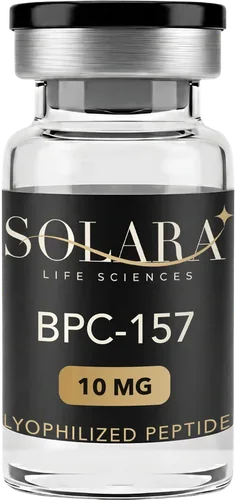
Every Solara vial carries five things: the compound by its common name, the total quantity in milligrams, the form, an expiry date, and the words for research use only. Each line is a statement about the material, and nothing on the label is a statement about anything else.
The compound name
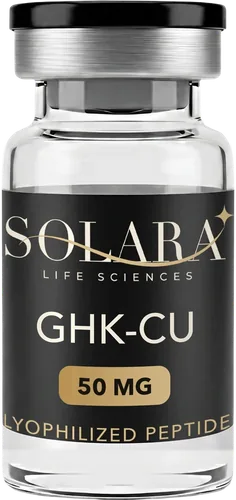
The name is the common name the compound is known by in the literature and across the category: BPC-157, GHK-Cu, Semax. It is shorthand for a specification, and the shorthand is not always unambiguous. A code number says who first described a molecule, a suffix such as No DAC or LR3 says how it was modified, and the same name is sometimes applied by different suppliers to different molecules. How research peptides are named goes through the conventions.
The quantity
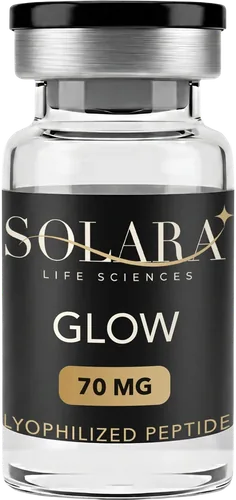
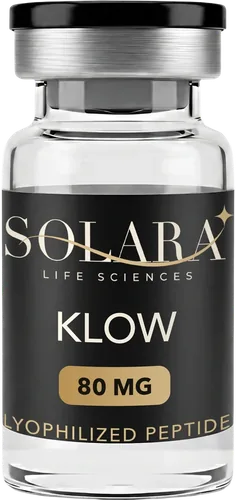
The milligram figure is the total quantity stated for the vial. On a single compound it is one number: 10 mg. On a co-supplied preparation it is the sum of the components, and the product page lists each one. GLOW at 70 mg is GHK-Cu 50 mg, BPC-157 10 mg and TB-500 10 mg in one vial; KLOW at 80 mg adds KPV 10 mg.
A labelled mass and the mass of peptide in a powder are not the same measurement. A lyophilized powder also contains counter-ions and water, and the share that is peptide is a separate figure called net peptide content. Purity versus net peptide content explains the distinction. Solara does not publish net peptide content per lot.
The form
Lyophilized means freeze-dried: water removed from a frozen solution by sublimation, leaving a dry porous solid. The form line tells a laboratory what is physically in the vial, a solid rather than a solution, which is what sets the storage conditions printed on the product page. What lyophilized means covers the process.
Expiry date and lot number
The expiry date is the last date stated for the material in the sealed vial. Where a label carries a lot number, it identifies the batch a vial came from and is the thread to any record of that batch: the chromatogram, the mass spectrum, the stability record.
For research use only
The last line is the condition of supply. The material is supplied for laboratory research. It is not a licensed drug, carries no Drug Identification Number, and no page on this site describes an effect of any compound on a person. The Research use policy states the full position.
What the label does not carry: the amino acid sequence, the salt form, and the purity. Those are specification items that belong in batch documentation, not on a label a few centimetres wide.
What this does not establish
- The label does not state purity, net peptide content or sequence. Where a product page shows a purity figure, it is the manufacturer's lot result, not a measurement of the vial in hand.
- The expiry is a date stated for the sealed vial, and this article does not interpret it for any storage condition.
- Nothing on the label describes what a compound does.
Questions
What does the milligram figure on a blend mean?
What does research use only mean on a label?
Why is the amino acid sequence not on the label?
Every compound on this site is supplied as a lyophilized powder for laboratory research use only. Nothing in this article describes an effect on a person or is a claim about any product.